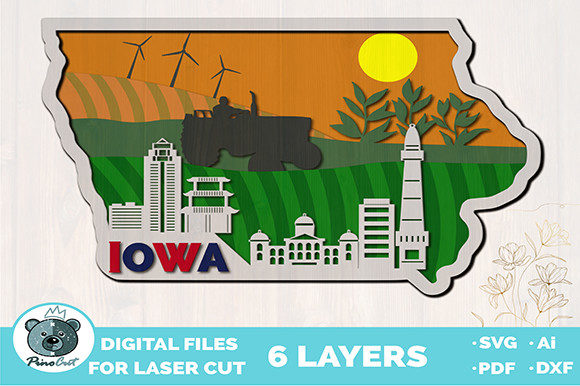
Crafting a 3D Layered Tropical Iowa Sign: A Practical Guide for CNC and Laser Projects
The intersection of regional pride and artistic design often yields unique opportunities for creators, small business owners, and hobbyists. One such project that has gained traction in the digital fabrication community is the 3D Layered Tropical Iowa Sign. This concept merges the geographical identity of Iowa with an unexpected aesthetic twist—tropical motifs—creating a visually striking piece suitable for home decor, retail displays, or promotional events. For professionals working with Computer Numerical Control (CNC) routers or laser cutters, this project represents more than just a decorative item; it is a streamlined workflow asset that demonstrates how digital vector files can be transformed into tangible products with minimal friction.
At its core, this project relies on a precise vector drawing available in electronic format. These files serve as the blueprint for the entire manufacturing process. Whether you are a freelancer looking to expand your product line, an educator teaching digital fabrication, or a marketer seeking custom branded merchandise, understanding how to integrate this specific design into your workflow is essential. The availability of archived files containing the cutting plan means that the initial design phase is effectively bypassed, allowing you to focus immediately on material selection, machine setup, and finishing techniques.
Integrating Digital Assets into Your Production Workflow
In any manufacturing or creative endeavor, the preparation stage dictates the quality of the final output. When working with the 3D Layered Tropical Iowa Sign, the process begins long before the machine powers on. It starts with the acquisition and verification of the digital assets. Since the project files are archived and ready for download, the immediate task is organization. Upon downloading, you should extract the contents and inspect the vector layers. Most professional vector files for layered signs separate each depth level onto a distinct layer or color code. This separation is critical for mapping toolpaths in CAM (Computer-Aided Manufacturing) software or setting power and speed parameters for laser cutters.
For those using CNC routers, the vector file acts as the guide for bit selection and cutting depth. The "layered" aspect of the sign implies that multiple pieces of material will be stacked to create a three-dimensional relief effect. This requires careful planning regarding registration. You must ensure that the alignment holes or registration marks included in the drawing-vector cutting plan are preserved during the nesting process. If you modify the design layout to suit specific dimensional requirements—a key feature of these downloadable files—you must maintain the proportional integrity of the layers to ensure they stack correctly without gaps or misalignment.
Laser cutting users face a slightly different set of considerations. While the vector paths remain the same, the kerf (the width of material removed by the laser) becomes a significant factor, especially when dealing with tight-fitting joints or stacked layers. The provided files are optimized for standard conditions, but real-world implementation demands testing. A practical approach is to cut a single test layer from scrap material to verify fit and tolerance before committing to the full batch. This step aligns with quality control protocols essential for mass production or high-end custom work.
Material Selection and Economic Efficiency
The choice of material significantly influences both the aesthetic outcome and the economic viability of the project. The documentation for this specific sign recommends using 3mm plywood. This thickness is not arbitrary; it strikes a balance between structural rigidity and ease of cutting. For laser cutters, 3mm is often the sweet spot where a single pass can achieve a clean cut without excessive charring, while for CNC routers, it allows for detailed profiling without risking breakage of fine features.
Plywood is also an economically sound choice. Compared to solid hardwoods or acrylics, plywood offers a lower cost per unit, which is crucial for projects intended for mass production. When producing items for retail or large-scale distribution, margin optimization is key. Using 3mm plywood allows you to nest multiple signs on a single sheet, minimizing waste. Furthermore, the layered construction adds perceived value. A sign made from three layers of 3mm plywood appears substantial and crafted, yet the material cost remains low. This efficiency makes the 3D Layered Tropical Iowa Sign an attractive option for entrepreneurs looking to scale their inventory without heavy capital investment.
However, material consistency is vital. Not all plywood is created equal. For a professional finish, select void-free plywood, such as Baltic birch, which lacks internal gaps that can ruin the edge quality during cutting. If the project involves painting, a smoother grade plywood reduces the amount of sanding required post-cutting. For natural wood finishes, the grain pattern of the plywood becomes a design element itself, adding texture to the tropical theme.
Execution: From Cutting to Assembly
Once the files are prepared and materials selected, the execution phase begins. This stage is where the theoretical design meets physical reality. For CNC operations, secure the plywood firmly to the spoil board. Because the design involves intricate layers likely featuring tropical elements like palm leaves or floral patterns intertwined with the state outline, vibration must be minimized to prevent tear-out. Using appropriate hold-down methods, whether vacuum tables or mechanical clamps positioned outside the cut path, ensures precision.
After cutting, the parts require cleaning. CNC cuts may leave slight burrs, while laser cuts often have soot residue. A quick sanding or wiping with a damp cloth prepares the surfaces for assembly. The assembly process for this project is designed to be straightforward, catering to users who may not have advanced woodworking skills. The layers typically adhere using wood glue or double-sided tape. Applying adhesive evenly is crucial to prevent warping or visible glue squeeze-out, which can mar the finish.
Alignment is the most critical step during assembly. Utilize the registration features inherent in the vector drawing. If the design includes dowel holes or interlocking tabs, ensure these are cleared of debris before joining. For a seamless look, clamp the layers together while the adhesive cures. This ensures a tight bond and maintains the flatness of the sign. The result is a cohesive 3D object where the depth creates shadows and highlights, enhancing the visual impact of the tropical-Iowa fusion.
Finishing and Customization Options
One of the strongest selling points of this project is its versatility in finishing. The raw plywood look appeals to a rustic or industrial aesthetic, but the surface is equally ready for customization. As noted in the project guidelines, you can paint in any color or decorate with additional elements. This flexibility allows the product to adapt to various market segments. A bright, vibrant paint scheme might appeal to a younger demographic or summer-themed events, while a stained, natural finish could target home decor enthusiasts preferring subtlety.
For marketers and brand managers, this adaptability is powerful. The sign can be customized with specific color palettes to match corporate branding or event themes. Adding decorative elements such as LED backlighting, glitter accents, or even small attached ornaments can elevate the product from a simple sign to a statement piece. The layered design naturally creates nooks and crannies that can house lighting strips, creating a glowing effect that emphasizes the 3D contours.
Furthermore, the ease of modification means you can iterate quickly. If a client requests a size change or a slight alteration to the tropical motifs, the electronic format allows for rapid adjustments in vector software like Adobe Illustrator or CorelDRAW. This responsiveness is invaluable in a service-based business model where client satisfaction depends on the ability to accommodate specific requests without restarting the entire design process.
Scalability and Long-Term Utility
Beyond individual creation, the 3D Layered Tropical Iowa Sign serves as a robust template for scalable operations. The "economical and easy to assemble" nature of the project makes it ideal for workshop environments aiming for high throughput. Once the workflow is established—from file import to final packaging—the time per unit decreases significantly. This efficiency supports bulk orders for tourism boards, local businesses, or educational institutions.
Educators can also leverage this project to teach principles of design, engineering, and manufacturing. It provides a tangible example of how 2D vectors translate into 3D objects, illustrating concepts like tolerance, material properties, and assembly logic. Students gain hands-on experience with industry-standard tools while producing a finished product they can be proud of.
In the broader context of a creative business, maintaining a library of such ready-to-produce files enhances operational agility. Having archived, tested, and optimized designs allows you to pivot quickly between projects based on demand. The Iowa, 3D Layered Tropical Iowa Sign is not just a single product; it is a component of a larger, flexible production strategy. By mastering the integration of these digital assets, optimizing material usage, and refining the finishing process, creators can deliver high-quality, unique products that resonate with diverse audiences while maintaining healthy profit margins.
Ultimately, the success of this project lies in the seamless transition from digital file to physical object. It exemplifies how modern fabrication tools, when paired with well-structured design assets, empower individuals and businesses to create professional-grade results efficiently. Whether for personal enjoyment or commercial enterprise, the process offers a rewarding blend of technical precision and artistic expression.