Elevating Personalized Gifts with Dad Laser Cut 2 Layers 3D Designs
The landscape of personalized gifting and custom decor has shifted dramatically in recent years. What was once a niche hobby for craft enthusiasts has evolved into a robust market driven by consumers seeking unique, meaningful items that mass production simply cannot replicate. At the heart of this transformation is the accessibility of high-quality digital design files, specifically those optimized for modern fabrication tools. Among the most popular and emotionally resonant designs currently trending are Dad Laser Cut 2 Layers 3D projects. These designs offer a perfect blend of simplicity and depth, allowing creators to produce stunning physical objects that celebrate fatherhood with a professional finish.
Understanding the appeal of these layered designs requires looking at how consumer expectations have changed. Today's audience, whether they are small business owners selling on Etsy, hobbyists creating gifts for family, or marketers developing branded merchandise, demands higher quality and greater customization. A flat, single-layer cutout often feels incomplete. By introducing a second layer, creators add shadow, depth, and dimension, turning a simple silhouette into a piece of art. This evolution from 2D to pseudo-3D reflects a broader trend in the maker community: the pursuit of premium aesthetics using accessible technology.
The Technical Advantage of Layered Vector Files
The core of any successful laser cutting project lies in the source file. When working with Dad Laser Cut 2 Layers 3D concepts, the difference between a frustrating experience and a seamless workflow often comes down to file format and quality. Professional creators rely on vector files because they offer unlimited resizing without any loss of quality. This is crucial for versatility; a design intended for a small keychain might later be adapted for a large wall hanging or a tabletop sign. Without a true vector format, scaling up an image results in pixelation and jagged edges that ruin the final product.
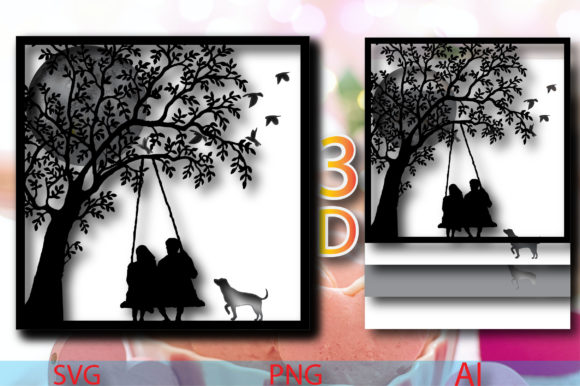
This is where the specific composition of the file package matters immensely. A comprehensive set typically includes SVG vector files, which are the industry standard for compatibility with software like Silhouette Studio, Cricut Design Space, and Adobe Illustrator. However, the workflow does not stop there. Professionals also require PNG raster files at high resolution, specifically 300ppi with a transparent background. These are essential for previewing designs, creating marketing mockups, or using sublimation techniques where vector paths are not the primary method of application. Furthermore, the inclusion of Ai (Adobe Illustrator) files ensures that users with advanced editing needs can tweak anchor points, adjust kerning, or modify specific elements of the design before sending it to the cutter.
The availability of original images without watermarks and with no background is not just a convenience; it is a necessity for efficiency. Watermarked files require time-consuming cleanup, and backgrounds can interfere with the nesting process in laser cutting software, leading to material waste. By providing clean, ready-to-use assets in multiple formats, designers empower users to focus on creation rather than preparation. This aligns with the modern workflow where speed and precision are paramount.
Adapting to Modern Creative Workflows
The rise of the "prosumer" creator—individuals who possess professional-grade skills but operate as freelancers or small business owners—has driven the demand for versatile digital assets. These individuals often juggle multiple roles: designer, marketer, manufacturer, and customer service representative. For them, a file set that includes SVG, PNG, and Ai formats is not a luxury; it is a critical tool that streamlines their operations. It allows them to pivot quickly between different production methods. For instance, a creator might use the SVG file for a wooden plaque one day and the high-resolution PNG for a t-shirt print the next, all from the same core design concept.
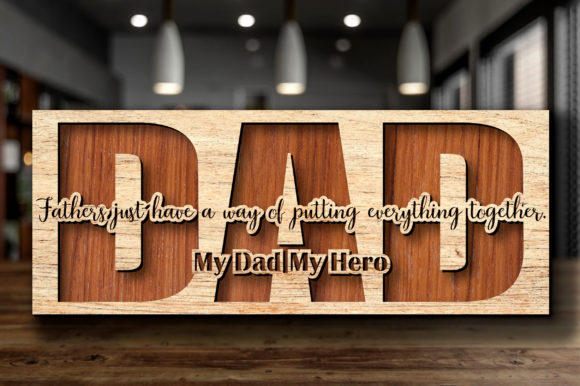
Moreover, the trend toward Dad Laser Cut 2 Layers 3D designs fits perfectly into the current cultural emphasis on heartfelt, personalized gestures. In an era of digital saturation, physical objects that convey effort and thoughtfulness hold significant value. Father's Day, birthdays, and "just because" gifts are occasions where these designs shine. The two-layer approach allows for creative color contrasting—perhaps a dark walnut base with a lighter maple top layer, or painted accents that pop against a natural wood grain. This level of customization meets the user expectation for products that feel bespoke rather than generic.
From a business perspective, offering layered 3D products can also justify a higher price point. Customers perceive multi-dimensional items as more complex and valuable than flat cutouts. This perception is grounded in reality; layered projects often require more precise assembly and material handling, skills that competent creators possess and that clients are willing to pay for. Consequently, having access to high-quality, watermark-free source files directly impacts the bottom line by reducing prep time and enabling the production of premium goods.
Practical Applications and Material Choices
When executing a Dad Laser Cut 2 Layers 3D project, the choice of materials plays a pivotal role in the final aesthetic. While plywood and MDF are staples in the laser cutting community, the layered design opens the door to mixed-media experimentation. Creators might combine wood with acrylic for a modern, sleek look, or use felt layers for a softer, tactile finish suitable for nursery decor. The transparency of the provided PNG files at 300ppi is particularly useful here, allowing designers to digitally overlay their chosen material textures to visualize the outcome before making a single cut.
The practical implications extend to the assembly process as well. Two-layer designs are generally straightforward to assemble, often requiring only wood glue or double-sided tape. This simplicity makes them accessible to beginners while still offering enough design sophistication to satisfy experienced makers. The depth created by the second layer also provides a natural space for embedding LED lights, transforming a static sign into a glowing night light—a popular variation for children's rooms or man caves. This adaptability ensures that the design remains relevant across different seasons and trends.
For educators and workshop leaders, these files serve as excellent teaching tools. They demonstrate fundamental concepts of vector design, material layering, and assembly logic without overwhelming students with complex geometry. The clear separation of layers in the SVG and Ai files allows instructors to explain how positive and negative space interact, providing a hands-on lesson in design principles that translates to other digital mediums.
Future-Proofing Your Digital Library
As technology continues to evolve, the formats we use today may eventually be supplemented by new standards, but the foundational need for scalable, clean, and versatile assets will remain. Investing in a comprehensive file set that includes SVG, PNG, and Ai formats is a strategy for future-proofing your creative library. Whether you are using a diode laser today or planning to upgrade to a CO2 machine tomorrow, or perhaps expanding into CNC routing where vector paths are equally critical, these files ensure compatibility across a wide range of hardware.
Furthermore, the trend toward sustainability in manufacturing favors digital fabrication. Laser cutting is inherently efficient, minimizing waste through precise nesting of parts. When combined with high-quality, error-free design files, this efficiency is maximized. There is no need to re-cut due to broken paths or low-resolution errors, saving both material and energy. For the environmentally conscious creator, this reliability is a significant factor in selecting digital assets.
In conclusion, the shift toward Dad Laser Cut 2 Layers 3D designs represents more than just a stylistic preference; it is a reflection of a maturing market that values quality, depth, and efficiency. By utilizing original images without watermarks and leveraging the full suite of available file formats, creators can unlock their full potential. Whether you are a seasoned entrepreneur looking to expand your product line, a hobbyist seeking the perfect gift, or a professional adapting to new client demands, these resources provide the foundation for success. The ability to seamlessly move from digital concept to tangible, three-dimensional reality is the hallmark of modern making, and it starts with the right files.
- Versatility: Access to SVG, PNG, and Ai formats ensures compatibility with all major design and cutting software.
- Quality Assurance: High-resolution 300ppi PNGs and vector scalability guarantee crisp results at any size.
- Efficiency: Watermark-free, transparent backgrounds eliminate prep time, allowing for immediate production.
- Creative Depth: Two-layer designs offer superior aesthetic appeal compared to flat cutouts, meeting modern consumer expectations.
- Business Value: Premium-looking products command higher prices and enhance brand reputation.
Embracing these tools and techniques allows anyone to participate in the growing economy of personalized goods. As the barrier to entry for high-quality fabrication lowers, the differentiator becomes the quality of the design and the skill of the execution. With the right assets, such as a robust Dad Laser Cut 2 Layers 3D SVG package, the path from idea to impactful physical object is clearer and more achievable than ever before.