Crafting a 3D Multilayered French Bulldog Laser Cut Design
There is a distinct satisfaction in holding a physical object that started as a digital idea. For creators, small business owners, and hobbyists alike, the transition from a screen to a tangible product is where the real magic happens. If you are looking to expand your portfolio with something charming yet technically engaging, a 3D Multilayered French Bulldog Laser Cut design offers the perfect blend of artistic appeal and practical manufacturing ease. This isn't just a flat silhouette; it is a dimensional piece that brings character to life through depth, texture, and layering.
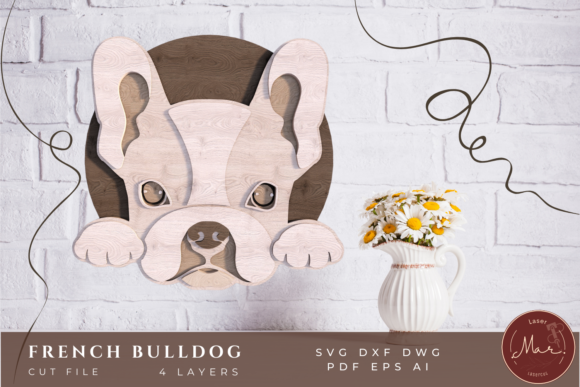
Welcome to the world of MarLaserCut, where precision meets creativity. The specific design we are exploring today features four distinct layers, resulting in a finished product with overall dimensions of 310 x 290 mm (approximately 12.2 x 11.4 inches). This size makes it substantial enough to serve as a statement piece on a shelf or a wall, yet compact enough to fit into various retail or gifting contexts. Whether you are running a Etsy shop, teaching a workshop, or simply decorating your home studio, understanding how to leverage these digital assets can significantly boost your output quality and efficiency.
Understanding the Mechanics of Multilayer Design
At its core, this project relies on the principle of stacking. Unlike traditional 2D laser cutting, which produces a single-plane image, a multilayered approach builds volume. The 3D Multilayered French Bulldog Laser Cut file provided in the ZIP folder contains separate vectors for each tier of the dog's form. When cut and assembled, these layers create shadows and highlights that mimic sculpture.
The technical foundation of this project lies in the file formats provided. You will receive a comprehensive suite including AI, EPS, SVG, DWG, DXF, and PDF. This variety ensures compatibility regardless of your workflow. If you use Adobe Illustrator for final tweaks, the AI and EPS files are ideal. For those operating directly from CAM software connected to industrial cutters, the DXF and DWG formats offer robust pathing data. SVG works beautifully for web-based design tools or smaller desktop machines. The inclusion of a PDF allows for quick visual verification before you even open your design software.
One critical step often overlooked by beginners is file preparation. Before sending anything to your machine, you must unzip the folder. Right-click the archive and select "Extract Here" or extract to a named folder corresponding to the product. Attempting to run files directly from a compressed zip can lead to path errors or corrupted data. Once extracted, remember that the size is fully adjustable within your cutting software. However, exercise caution when downsizing. As you scale the 310 mm width down, the thin connecting pieces between layers may become too fragile to hold together or cut cleanly. Always preview your toolpaths to ensure structural integrity remains intact at smaller scales.
Material Selection and Aesthetic Possibilities
The versatility of this design shines when you consider the materials available to you. While the default recommendation is wood, the 3D Multilayered French Bulldog Laser Cut adapts beautifully to various mediums depending on your end goal.
- MDF and Plywood: These are the go-to choices if you plan to paint the final piece. MDF offers a smooth, grain-free surface that accepts primer and acrylics effortlessly, making it ideal for achieving a uniform, cartoon-like finish. Plywood, with its natural grain, adds rustic charm and works well if you intend to stain the layers or leave them natural for a Scandinavian aesthetic.
- Acrylic: For a modern, glossy look, colored acrylic is unmatched. You can use opaque colors to create bold contrasts between layers or translucent sheets to allow light to pass through, creating a stained-glass effect if backlit.
- Glitter Acrylic: If you want to capture attention immediately, combining a solid base layer with glitter acrylic top layers adds sparkle and depth. This is particularly effective for holiday decorations or gift items targeting pet lovers.
- Mixed Media: Don't feel restricted to one material. Try cutting the base layers in wood for stability and the top detailing layers in contrasting acrylic. This hybrid approach highlights the dimensionality of the Frenchie's face and ears.
The instruction set suggests painting the piece to add color and texture, but the possibilities truly are endless. You might use wood burning tools to add fur texture to plywood layers before assembly, or apply metallic waxes to highlight the edges of an MDF cut. The four-layer structure provides ample surface area for creative expression without overwhelming the assembler.
Practical Applications for Professionals and Creators
Why invest time in this specific design? The applications extend far beyond simple home decor. For entrepreneurs and marketers, physical products serve as powerful branding tools. A custom-branded 3D Multilayered French Bulldog Laser Cut could serve as a unique corporate gift for a veterinary clinic, a pet supply store, or a dog walking service. It demonstrates thoughtfulness and craftsmanship that a standard promotional pen simply cannot match.
Educators and workshop leaders can also find immense value here. Teaching the concept of layering and depth is essential in design curriculums. This project serves as an excellent case study for students learning about vector manipulation, material constraints, and assembly logic. Because the files come in multiple formats, it accommodates different software ecosystems found in schools and maker spaces. Students can focus on the finishing techniques—sanding, gluing, painting—while relying on the precise vector data for the cutting phase.
For bloggers and content creators, documenting the process of making this item provides engaging visual content. Time-lapse videos of the laser cutter in action, followed by the satisfying assembly of the four layers, perform exceptionally well on social media platforms. It taps into the popular "oddly satisfying" niche while showcasing your skills as a maker. Furthermore, selling the finished physical product or even offering customized versions (such as adding a nameplate to the base layer) can open up a new revenue stream for freelancers looking to monetize their equipment.
Assembly and Final Considerations
Once the cutting is complete, the assembly process is straightforward but requires attention to detail. The files are organized so that you can stack the layers in the order found in the reference image. Typically, this means starting with the largest base layer and working up to the finest details. Use a high-quality wood glue or acrylic cement depending on your chosen material. Clamping lightly while the adhesive sets ensures tight seams and a seamless 3D effect.
If you are outsourcing the cutting, communication is key. When taking the files to a local fabrication shop, specify the exact size you desire if it differs from the original 12.2 x 11.4 inches. Remind the operator about the thin items if you are downsizing, as some machines have minimum kerf widths that might obliterate fine details. Editing the file yourself before submission gives you the most control, allowing you to thicken delicate lines or adjust spacing for thicker materials.
In conclusion, the 3D Multilayered French Bulldog Laser Cut from MarLaserCut represents more than just a cute dog shape. It is a versatile asset that bridges the gap between digital design and physical reality. Whether you are optimizing your production line, seeking a meaningful gift, or exploring new creative horizons, this four-layer design offers a robust foundation for success. By selecting the right materials, respecting the technical constraints of scaling, and applying your unique artistic touch, you can transform a simple ZIP folder into a standout piece of art.